
Why Your Website Is a Trust Layer Before It Is a Marketing Tool
A website is not just an online brochure. For businesses, consultants, coaches, agencies, service providers, and SMEs, it is often the first trust layer a potential client sees before starting a conversation.
DIGITAL GROWTH & STRATEGYBUSINESS ADVISORY & EXECUTION
Bhavesh Kulchandani
4/28/20262 min read
Why Your Website Is a Trust Layer Before It Is a Marketing Tool
Many businesses think of a website as a marketing asset.
That is true, but incomplete.
Before a website generates leads, it creates trust.
For founders, consultants, coaches, agencies, clinics, service providers, and SMEs, the website is often the first serious place where a potential customer checks credibility.
Before they call, message, or book a consultation, they usually want to understand:
- What do you do?
- Who do you help?
- Why should I trust you?
- What services do you provide?
- How can I contact you?
- Are you professional enough to work with?
If the website does not answer these questions quickly, the visitor may leave.
A Website Is Not Just Design
A good website is not only about colors, fonts, or images.
It is about clarity.
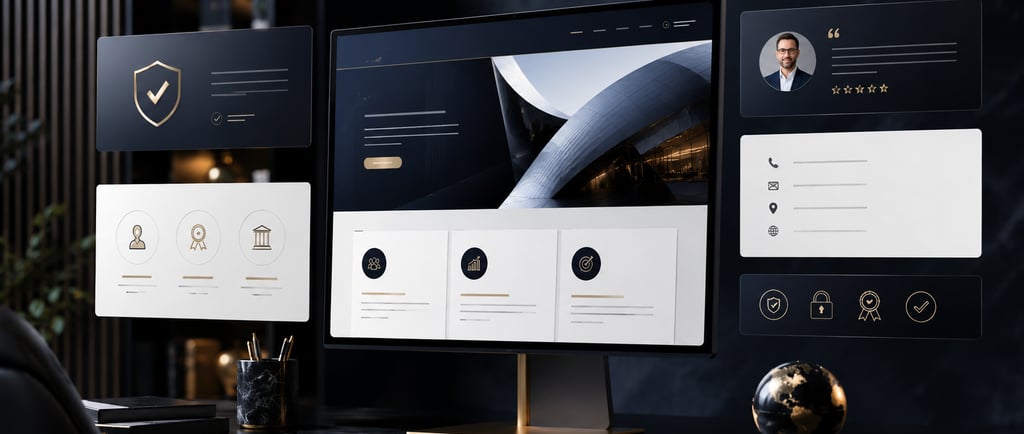
A strong business website should communicate:
- Clear positioning
- Service categories
- Audience fit
- Trust signals
- Process or approach
- Contact options
- Calls to action
Design matters.
But design alone cannot fix unclear messaging.
Why Trust Comes First
Most people do not buy immediately from a website.
They first evaluate.
They compare your online presence with other businesses. They check your professionalism. They look for consistency between your website, social media, Google presence, and communication.
If the website feels outdated, confusing, incomplete, or too generic, it weakens trust.
A strong website creates confidence before the sales conversation starts.
What a Business Website Should Do
A website should help visitors understand your business in the first few seconds.
It should clearly answer:
1. What do you offer?
Services should be easy to find and easy to understand.
2. Who is it for?
Visitors should quickly identify whether your service is relevant to them.
3. What makes you credible?
Experience, work examples, testimonials, process, and expertise matter.
4. What should they do next?
Calls to action should guide users toward inquiry, consultation, booking, or contact.
Common Website Mistakes
Businesses often lose trust because of:
- Vague headlines
- Too many services without structure
- Weak contact flow
- No credibility section
- No clear call to action
- Generic stock images
- Poor mobile experience
- Slow loading pages
- No SEO foundation
- No alignment with social media presence
These issues reduce confidence even when the business itself is good.
What Xpertera Recommends
At Xpertera, we approach websites as business assets, not just design projects.
A strong website should combine:
- Clear messaging
- Premium design
- Mobile responsiveness
- SEO foundation
- Lead capture structure
- Service clarity
- Trust-building sections
- Conversion-focused calls to action
The goal is simple.
When someone visits your website, they should understand your value and feel confident enough to take the next step.
Final Thought
Your website is often your first layer of trust.
Before you spend more on ads, content, or social media visibility, make sure your website can convert attention into confidence.
Need a premium website or digital presence review?
Connect with Xpertera.
Frequently Asked Questions
What is Xpertera Ventures?
Xpertera Ventures is an expert-led consulting, digital growth, and business ecosystem that helps businesses access support across technology, AI, websites, marketing, branding, business advisory, and professional networking.
What services does Xpertera provide?
Xpertera provides technology and AI consulting, Fractional CTO advisory, website development, SEO, social media marketing, PPC marketing, branding, graphics design, business advisory, and business network support.
Who can work with Xpertera?
What is the Xpertera Business Network?
Xpertera works with startups, SMEs, founders, consultants, coaches, agencies, professionals, service providers, and growth-focused businesses looking for expert support and digital growth.
The Xpertera Business Network is a curated business ecosystem for founders, consultants, experts, agencies, and service providers to build visibility, referrals, collaborations, and growth opportunities.
Does Xpertera provide AI consulting?
Yes. Xpertera provides AI strategy consulting, automation advisory, architecture review, and practical guidance to help businesses identify the right AI use cases and implementation roadmap.
How can I contact Xpertera?
You can contact Xpertera Ventures by email at info@xpertera.com or WhatsApp at +91-9313501590. You can also submit your requirement through the website contact form.